
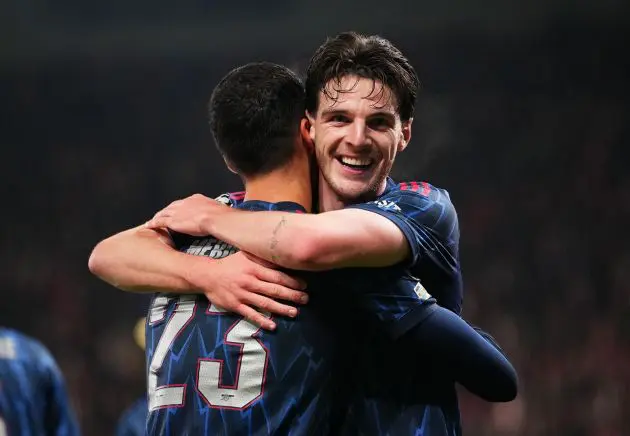
Over the last few seasons, Arsenal has had a genuine resurgence, placing the club back where its supporters have always believed it belongs. And that place is to challenge at the top of both English and European football. With a squad packed with talent, a manager whose philosophy now shapes the club’s identity and a fanbase more engaged than ever, Arsenal enters a new ambitious era. It’s a future where the modern supporter follows every tactical shift, every academy breakthrough and every transfer rumour with intensity. That same interest also fuels a rising analytical engagement with the sport, from tactical podcasts to soccer betting platforms that thrive on the depth of knowledge fans bring to the game.
This article takes a look at the state of Arsenal today including its players, its tactical evolution, expectations for the season, and the broader context of football culture surrounding the club. Whether Arsenal is fighting for a Premier League title, pushing for Champions League dominance, or navigating the emotional rollercoaster of cup campaigns, the club remains one of the sport’s most compelling stories.
From Transition to Contention
When Mikel Arteta joined Arsenal in December 2019, he inherited a fractured dressing room, an inconsistent playing style and a club deeply in need of direction. Four years later, Arsenal’s identity is now very clear with positional play, pressing intensity, technical midfielders, inverted fullbacks and fluid rotations through the attacking third. In short, the team has transitioned from one that was simply trying to stabilise, to one that can challenge top tier teams.
Today, Arteta’s team has one of the Premier League’s strongest defensive units, controlled possession, coordinated pressing and rehearsed positional play. The defense finds an anchor in William Saliba who combines athleticism and composure to lend an hand to the rest of the squad when it comes to maintaining an aggressive high line. In short, he’s as complete as it gets when it comes to centre backs. This is complemented by other players such as Gabriel Magalhães, whose physicality and aerial dominance complement Saliba’s calm distribution albeit on the left side of the back line.
The midfield, once a weekly source of anxiety, has also seen a major overhaul. The addition of Declan Rice accelerated Arsenal’s rise, adding power, tactical awareness and leadership. Rice’s ability to switch between roles including anchoring the midfield but also driving forward, has been essential in creating the more dynamic double-pivot variation.
The attack, meanwhile, blends youth and explosiveness. Bukayo Saka, one of Europe’s elite players, continues to elevate his output season after season, while Gabriel Martinelli’s direct style gives Arsenal a vertical threat and the option for running break defensive lines again and again.
Key Arsenal Players Defining the 2024–25 Season
With a squad undergoing a lot of changes over the last four years, it’s essential to take a look at who it is that’s really helped to turn the tide.
Bukayo Saka remains the face of Arsenal’s modern era. His development from Hale End academy graduate to world-class winger stands as one of the most impressive player journeys in the Premier League. Defenders often double-mark him, yet he retains the ability to glide through tight spaces, accelerate at decisive moments and deliver goals and assists consistently. His understanding of timing, body positioning and final-third movement continues to improve, making him a reference point for analysts, pundits and prediction communities including Stake.com, where fans often debate performance patterns and match outcomes.
Arsenal’s transformation into a title challenger accelerated with Rice’s arrival. Declan Rice has become the stabilising force Arsenal long lacked. His reading of the game, athleticism and calm control make him vital in breaking opposition presses and dictating tempo. He often acts as both a shield and an instigator, recovering possession before driving the ball forward or linking play with incisive passes. His leadership is equally influential, and he is now one of the first names on Arteta’s team sheet.
Arsenal’s captain is the tactical brain of the side. Martin Ødegaard continues to shape games through intelligence rather than physical dominance. His ability to interpret space, slip passes between defensive lines and execute complex pressing schemes makes him central to Arsenal’s tactical identity. Ødegaard’s spatial awareness, vision and signature left-footed passing unlock low blocks and maintain Arsenal’s dominance in possession and makes him one of the Premier League’s top pressing midfielders. Finally, he orchestrates the team’s rhythm in possession and sets the pressing triggers off the ball, embodying Arteta’s vision of a creative conductor who leads by example.
And lastly, there’s defense. Few defenders in Europe mix composure, athleticism and anticipation like William Saliba. Saliba remains indispensable to the club as a whole. He has the ability to dominate forwards in one-on-one situations, can read transitions and keep his composure during high-pressure situations. This means that Arsenal can commit numbers forward, without a huge defensive risk utilising a high line defense as they commit full-backs forward. With Saliba, Arsenal control territory. Without Saliba, the entire structure changes and the structure weakens noticeably.
Arsenal’s Tactical Identity
Arsenal’s tactical blueprint relies heavily on controlled possession and territorial dominance. In possession, the shape often resembles a three-box-three or a 3-2-5, depending on the full-back configuration. Jurrien Timber frequently steps inside to support the midfield and create a double pivot with Rice. Ben White or Myles Lewis-Skelly tuck in to create structural balance which allows Ødegaard and the wingers to occupy more advanced half-spaces.
Rotational play in the attacking third is equally important. Saka moves into central zones to combine with Ødegaard (who is great at finding interior pockets), Martinelli attacks from wide positions with explosive acceleration, and either Kai Havertz, Gabriel Jesus or summer-signing Viktor Gyokeres links play with subtle movement into pockets of space. These rotations create constant numerical superiority in key zones, overwhelming even well-organised defences.
Set pieces have become a strength as well. Under the guidance of set-piece coach Nicolas Jover, Arsenal have become one of the most effective sides in the league at scoring and preventing goals from dead-ball situations. This improvement has contributed significantly to tight victories and helped prevent momentum shifts during challenging matches while still adding crucial goals at just the right time.
Biggest Games of the Season So Far
Every Arsenal season is defined by landmark fixtures, and this campaign has already produced several that demonstrate the team’s growth.
The North London Derbies always bring a lot of emotion and momentum to the winning side. With this in mind, Tottenham vs Arsenal remains one of football’s most intense derbies. Arsenal hosted their local rivals at the Emirates Stadium and ended up delivering a 4-1 victory that showed just what the side is capable of. The game stood out because of the comprehensive nature of the performance. Right from the opening whistle, Arsenal controlled the tempo and broke through Spurs’ defensive setup right before halftime. This shifted momentum in their favour, and throughout the second half, Arsenal continued to capitalise, extending their lead.
A quieter, but still important match was Arsenal hosting Brentford. See the full BBC Match Report. Arsenal secured a 2-0 win and reestablished a five-point lead at the top of the Premier League table. Despite mounting injuries and external pressure, the team showed resilience and depth of squad to claim the win. Squad depth is extremely important It was efficient rather than flashy, but is the type of performance that can help win leagues. Smooth, controlled attacking play was coupled with disciplined defence and an advantage that might really help later on in the season.
Arsenal’s return to Europe’s elite competition brings new challenges and excitement. A notable match this season was Arsenal vs Bayern Munich which saw the Gunners reign supreme with a 3-1 win at home. It was a major turning point for the club’s European trajectory and is a hugely significant result as Bayern entered the game undefeated across all competitions. Arsenal took control from the off, showing depth and intelligent, structured pressing. Not only did this victory boost Arsenal’s points, but also confidence showing that the team was ready to play at the highest level.
Transfer Market and Future Planning
Arsenal’s long-term ambition requires continuous evolution. Arteta and sporting director Andrea Berta remain focused on intelligent recruitment that complements the existing core. The search for a clinical striker ended with the recruitment of Viktor Gyökeres in the summer transfer window.
There is also interest in adding depth at full-back, where injuries have occasionally disrupted consistency. Versatile defenders who can support inverted roles are being scouted, as well as a more direct left-wing option which has been identified as a weak area.
Hale End continues to play a major role in future planning. Ethan Nwaneri, Myles Lewis-Skelly and Max Dowman have all made their the senior squad debuts. Their progression reflects the club’s commitment to developing homegrown talent and maintaining a sustainable squad profile.
Arsenal’s Mentality Shift and Culture of Resilience
One of the biggest transformations under Arteta has been psychological. Arsenal of the late 2010s often struggled in high-pressure moments, but the current squad displays resilience and unity. Leaders such as Ødegaard, Rice and Gabriel have strengthened standards in training and during matches, while the younger players have embraced responsibility rather than shrinking from it. The team now approaches high-stakes games with confidence, knowing that the structure and preparation give them the tools to compete.
This mentality shift has been crucial in grinding out results, especially in difficult away fixtures. Arsenal now engage with adversity in a constructive way, responding with tactical discipline rather than panic. This composure is essential for sustaining a title challenge.
The Supporter Culture and Global Engagement
Arsenal’s global fanbase has grown dramatically thanks to the club’s digital presence and the accessibility of modern football analysis. Supporters can engage with the team via training clips, tactical breakdowns, player interviews and press conferences daily, creating a sense of constant connectivity to the club. This environment has given rise to a highly educated fan culture, where discussions revolve around expected goals, pressing traps, defensive structures and chance creation patterns.
Many fans engage with probability-based platforms to explore match outcomes and performance trends, reflecting the increasing sophistication of football analysis. Communities built around data, tactical thinking and predictive modelling mirror the structure of the modern game and deepen engagement far beyond traditional match-day experience.
The Challenges Ahead
Despite their progress, Arsenal face several hurdles. Injuries remain the most significant issue. Arteta’s high-intensity tactical approach requires rotation and freshness, yet some positions lack depth. Long-term absences to key players can significantly disrupt rhythm and chemistry. Finishing is another concern raised by many pundits and fans, though this point remains contentious.
Despite producing large volumes of chances, Arsenal occasionally struggle to convert opportunities efficiently. Instead, many say it’s more a case of not creating enough clear-cut opportunities during open play. As such, the squad is still overly reliant on set-pieces or single-goal margins.
Managing pressure during the season’s final months is equally important. This is especially the case as punters are already claiming Arsenal will win the Premier League with no doubts at all. Truth be told, defending champs, Liverpool, are far from looking their best, and Manchester City, normally so calm and assured have not shown such good structure this year. However, there’s the finger pointing to Arsenal’s historic tendency to drop points at crucial times in a title race which remains a concern as the season progresses.
Conclusion: Arsenal’s Identity Is Clear – Now Comes the Hard Part
Arsenal stands at the threshold of something special. Arteta has built a team with clear identity, talented players, strong leadership and a connection with supporters that grows stronger each season. Better still, the squad is comprised of both young, competitive players, and older, more experienced ones to add a solid balance.
The club’s journey is followed not only by fans but by analysts, pundits and global communities across tactical platforms, football discussion forums and even probability-focused environments like Stake.com, where upcoming fixtures and performance discussions remain central topics.
The next step is the biggest as it means turning this exciting progress into silverware. With a young, hungry squad and a manager determined to restore Arsenal to its historic heights, the coming seasons promise drama, brilliance and the relentless pursuit of trophies. Arsenal are no longer simply a promise or a project. They are contenders. And they fully intend to prove it.